TERE: Playful and Educational Narratives for Clean Mobility
Keywords:
Communication strategy, Visual pedagogy, Co-branding, Audiovisual production, Sustainable marketing
- 360º Communication strategy
- Visual identity and illustration
- Editorial design and education booklet
- Audiovisual production and postproduction
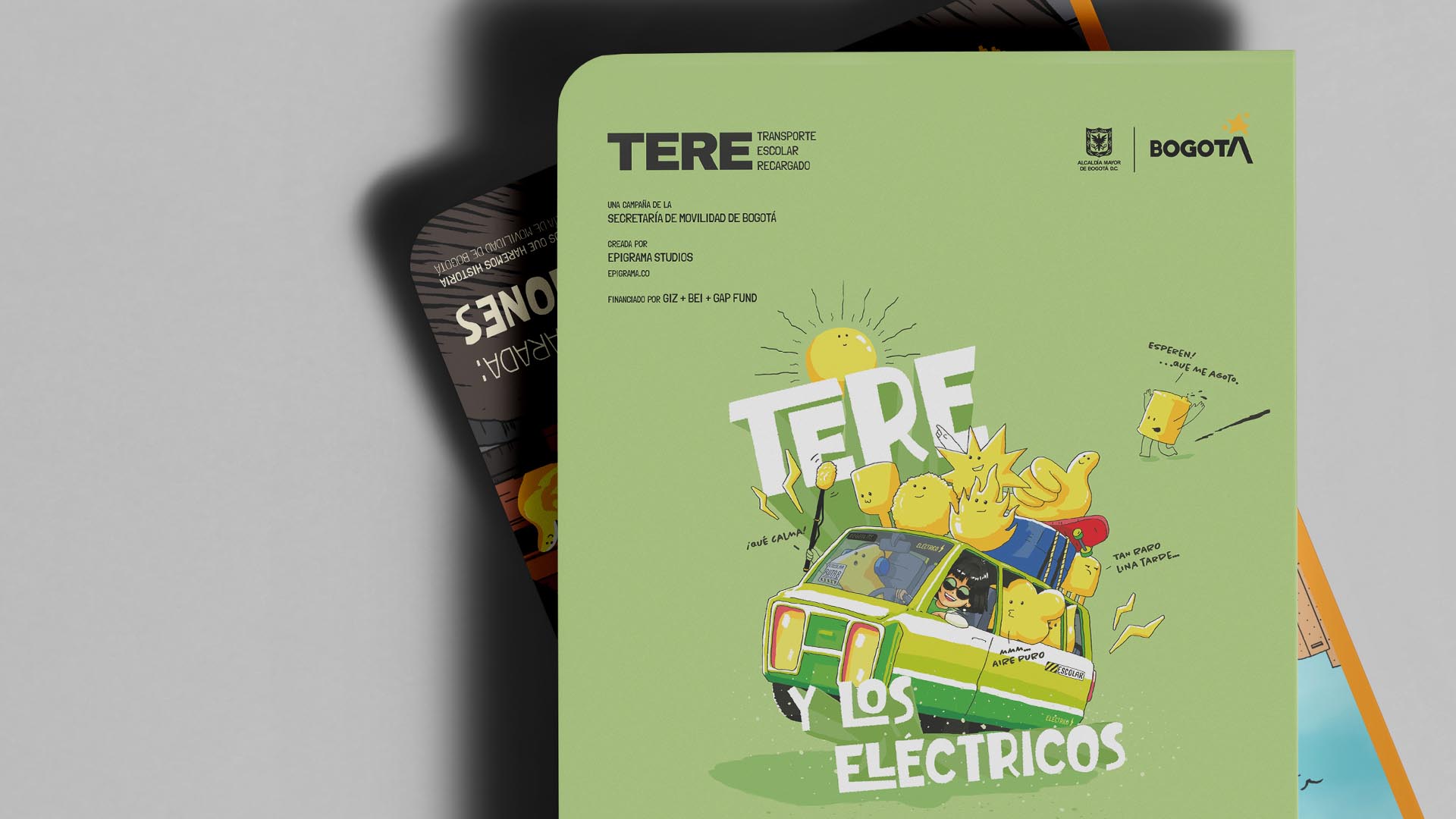
- Institutional co-branding





Starting point
The TERE project (Transporte Escolar Recargado / Rechargeable School Transit) was born as a pioneering initiative by the Bogotá Secretariat of Mobility (SDM) to drive the city’s technological advancement toward zero-emission school bus routes. Supported with technical and financial backing from the City Climate Finance Gap Fund (Gap Fund), the pilot program was jointly implemented by German Cooperation for Development (GIZ), the European Investment Bank (EIB), and the World Bank.
Faced with a robust ecosystem of local governance and international cooperation, we at Epigrama stepped in as multidisciplinary strategic allies across design, production, and visual storytelling. The goal was clear: transform dense engineering matrices, acoustic data, and financial indicators from the pilot test into a 360° communication strategy that would inspire industry decision-makers and accelerate civic ownership of this sustainable school mobility model.
Challenge / Opportunity
- The primary challenge consisted of translating the highly complex technical nature of vehicular electrification into a comprehensive, engaging, and multigenerational 360° communication strategy . We had the opportunity to co-create a narrative capable of simultaneously connecting with high-level international stakeholders, local government entities (Secretariats of Mobility, Education, and Environment), school principals, fleet drivers, parents, and, most importantly, children and adolescents.
- It was necessary to structure a bulletproof visual and educational ecosystem across three complex fronts: managing expectations regarding a progressive technological transition, showcasing a multi-tiered multilateral co-branding system (hierarchizing the brand guidelines of GIZ, the Gap Fund, international banking, and City District entities), all articulated through an approachable, clear, and educational language highlighting the system's benefits.
What We Did
We supported the deployment and pedagogy of the TERE project by developing an interactive, playful, and technically rigorous communication system:
- 360° Communication Strategy: We defined the discursive frameworks, optimal channels (online/offline), and message matrices tailored to multigenerational audiences.
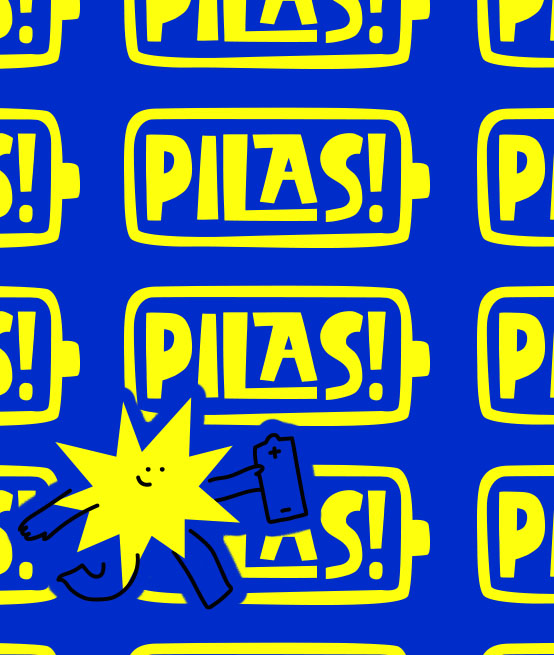
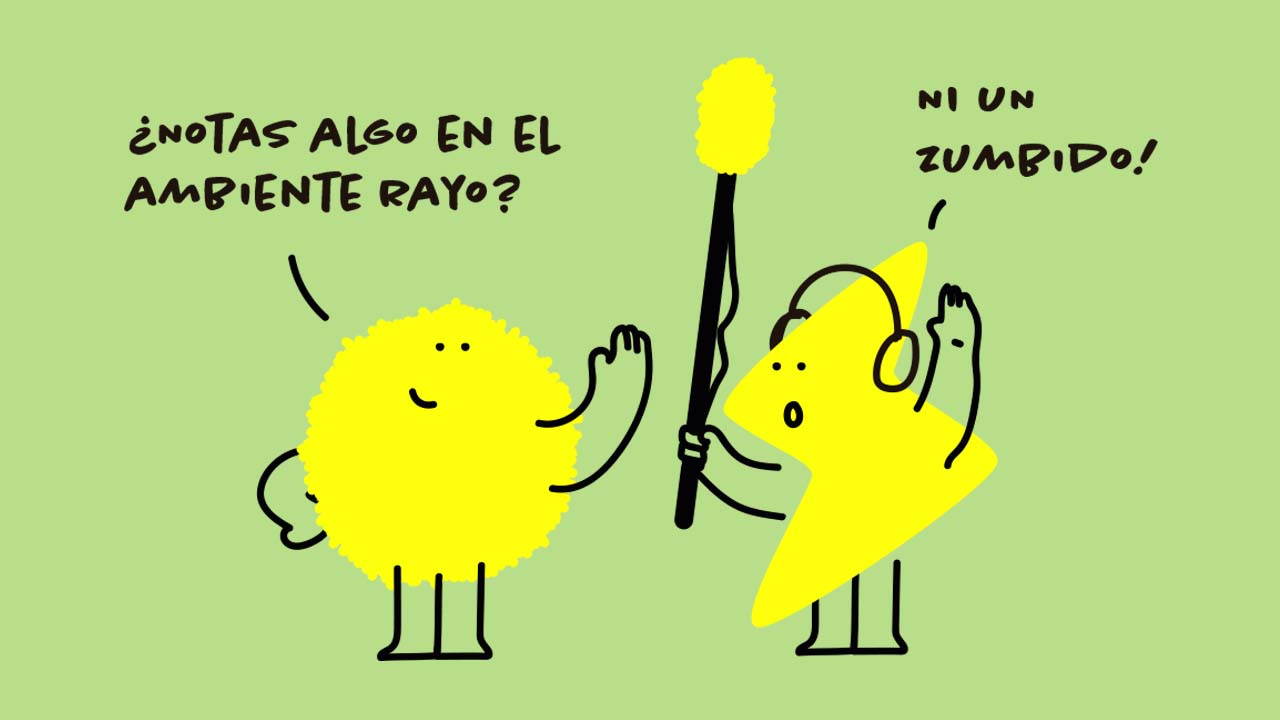
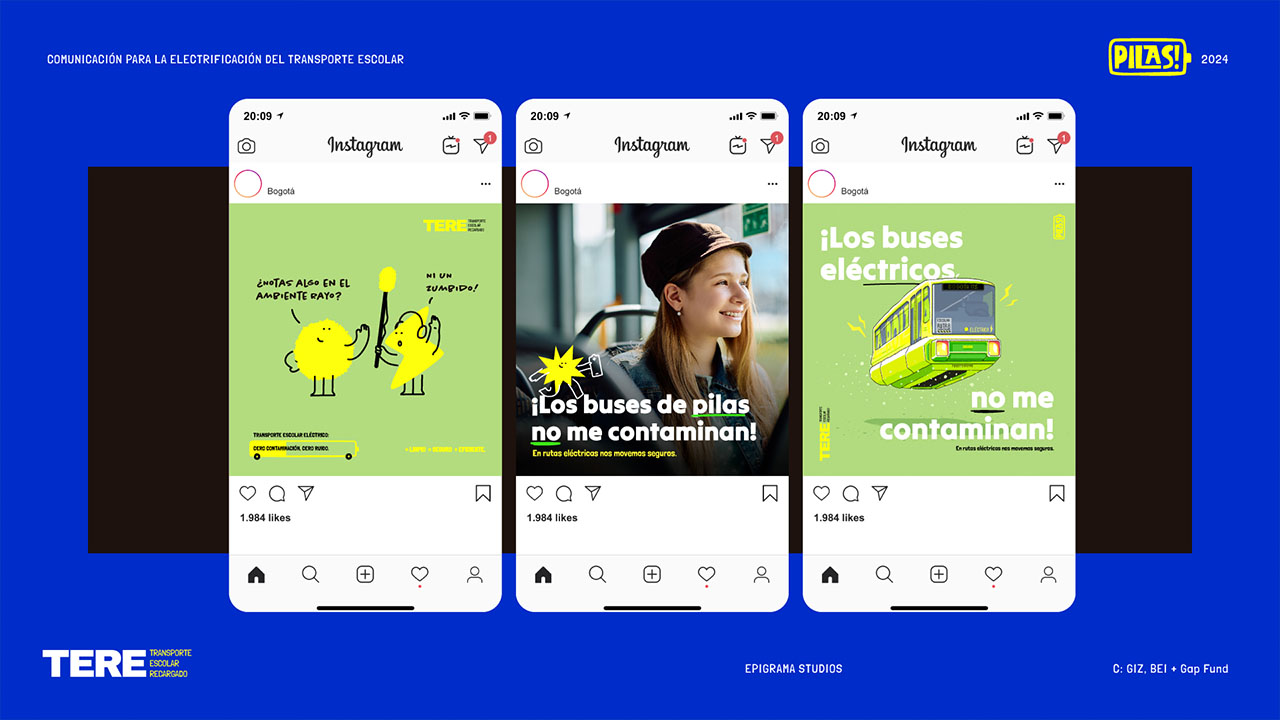
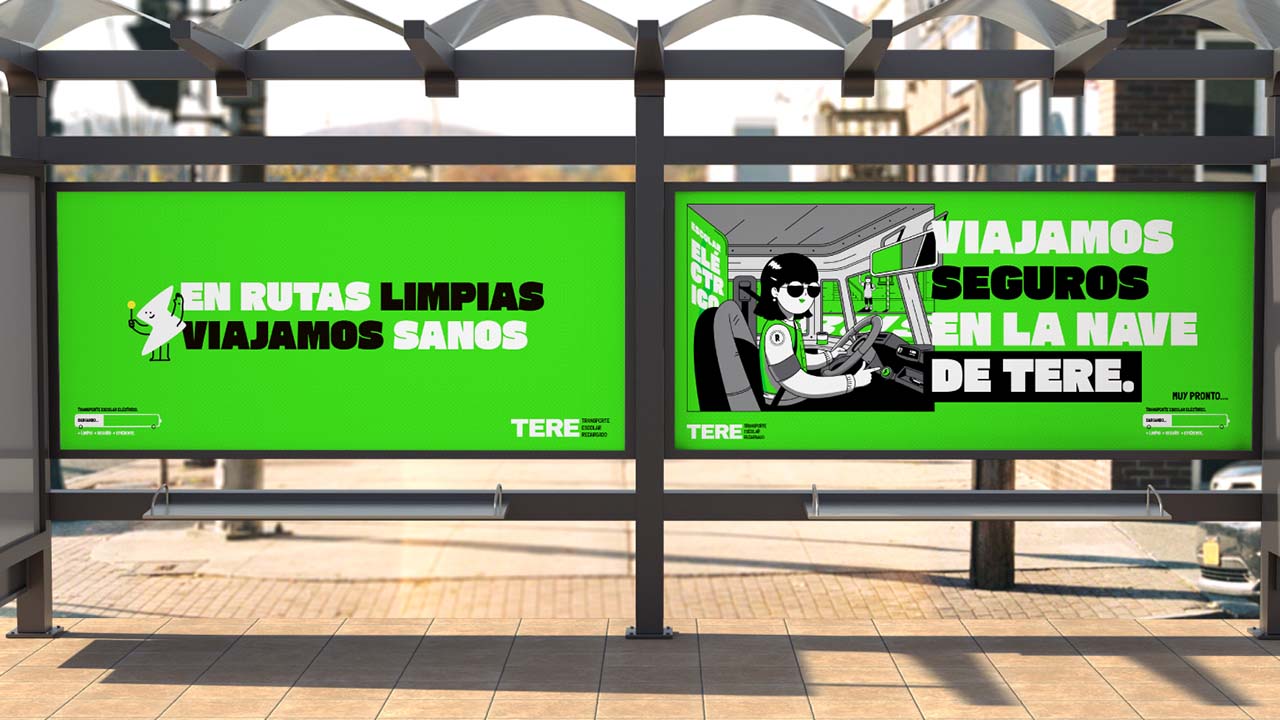
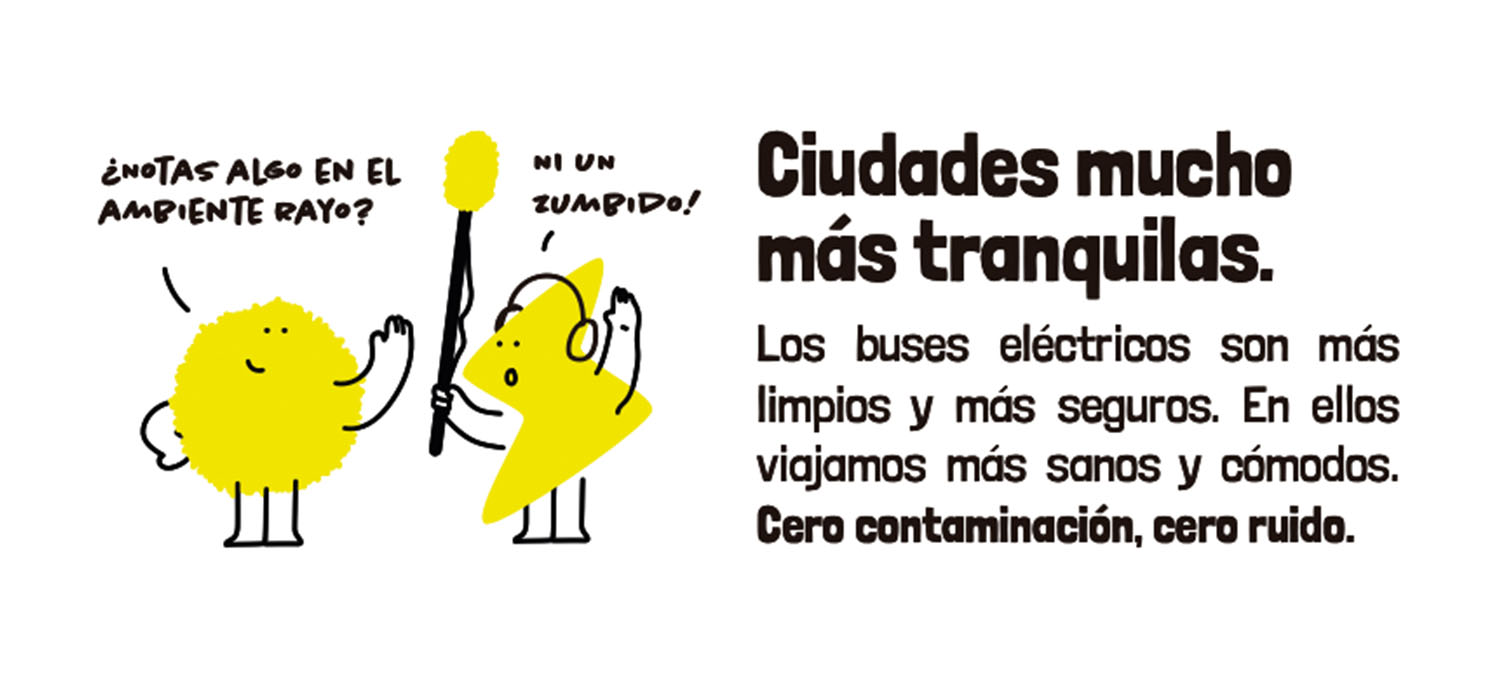
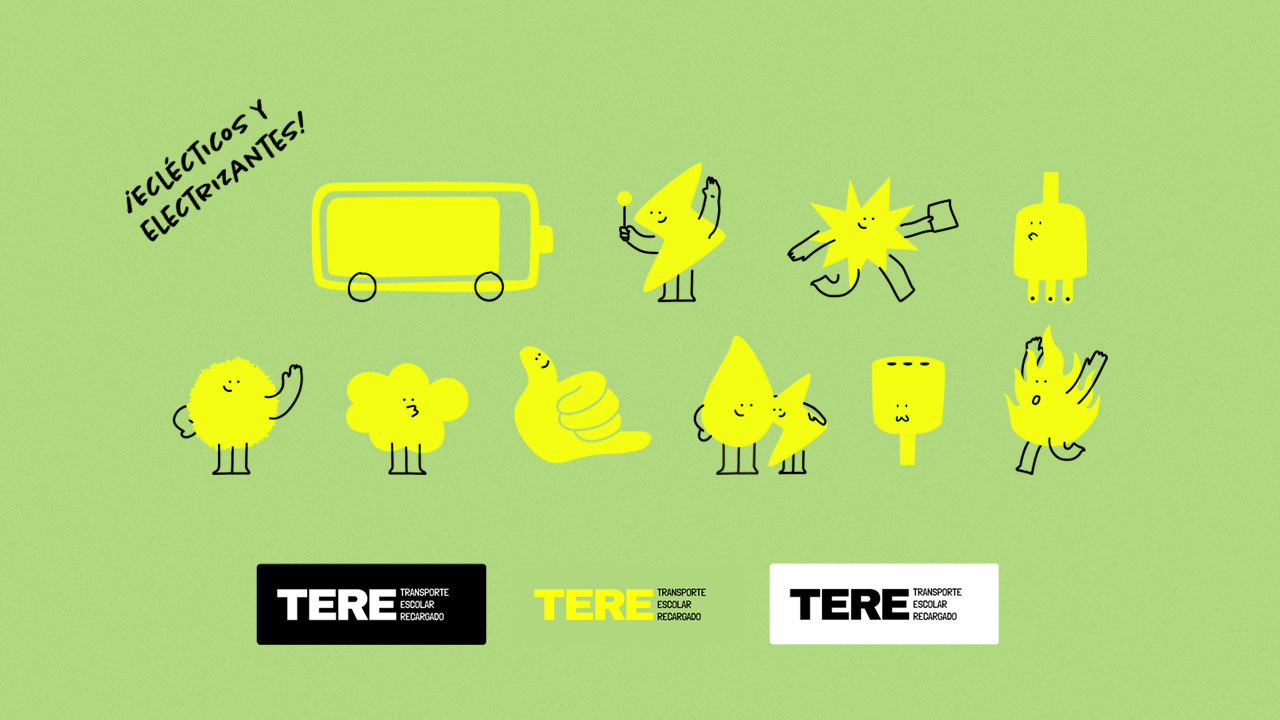
- Branding & Character Illustration: We created the project’s visual identity, complemented by a universe of charismatic animated characters.
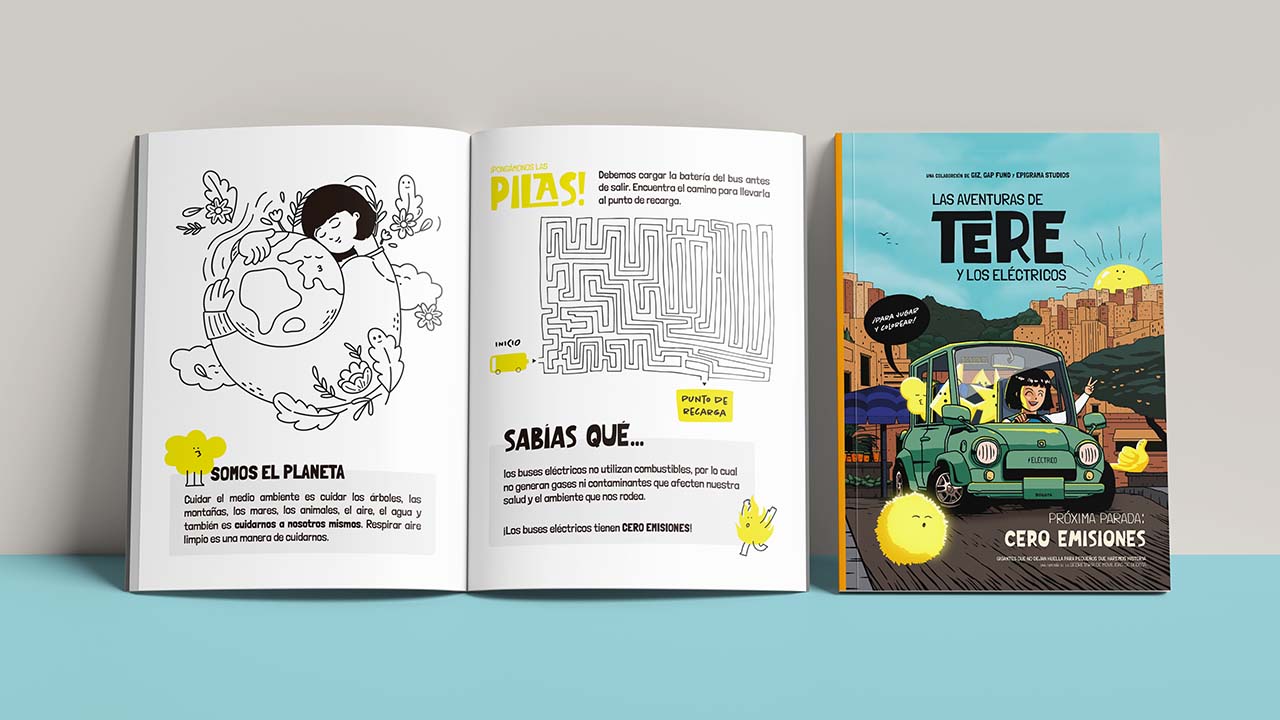
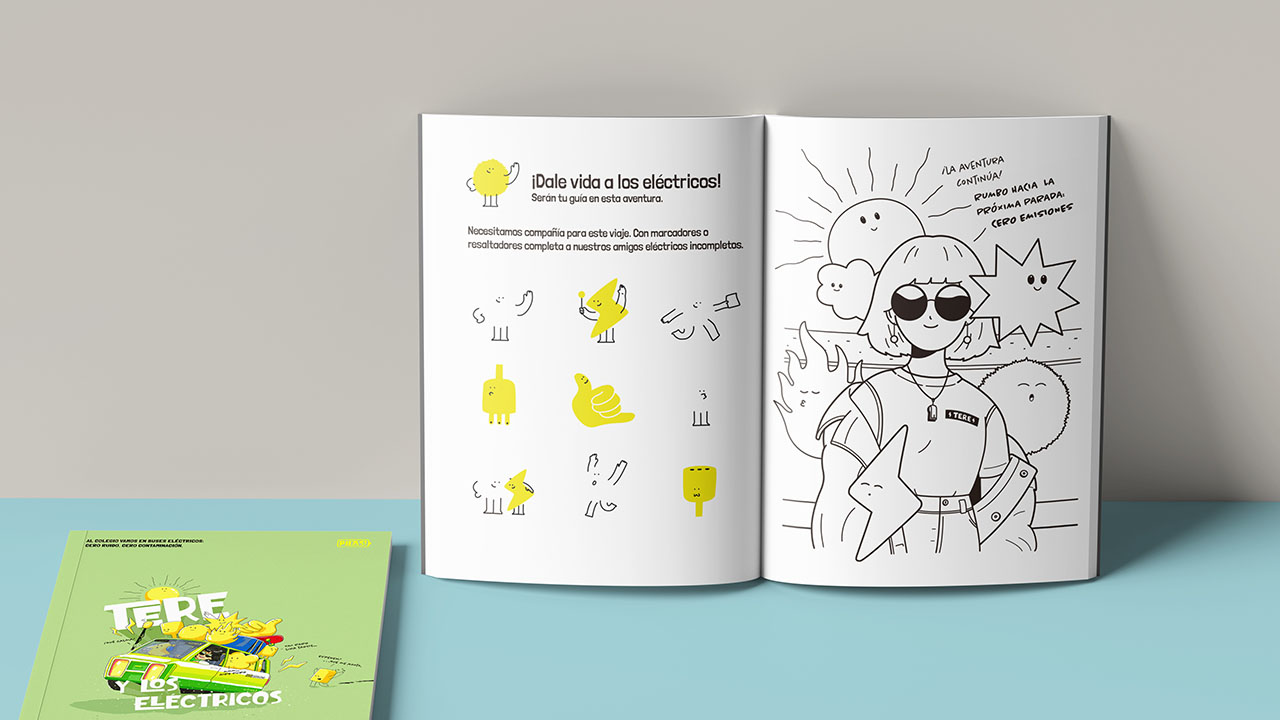
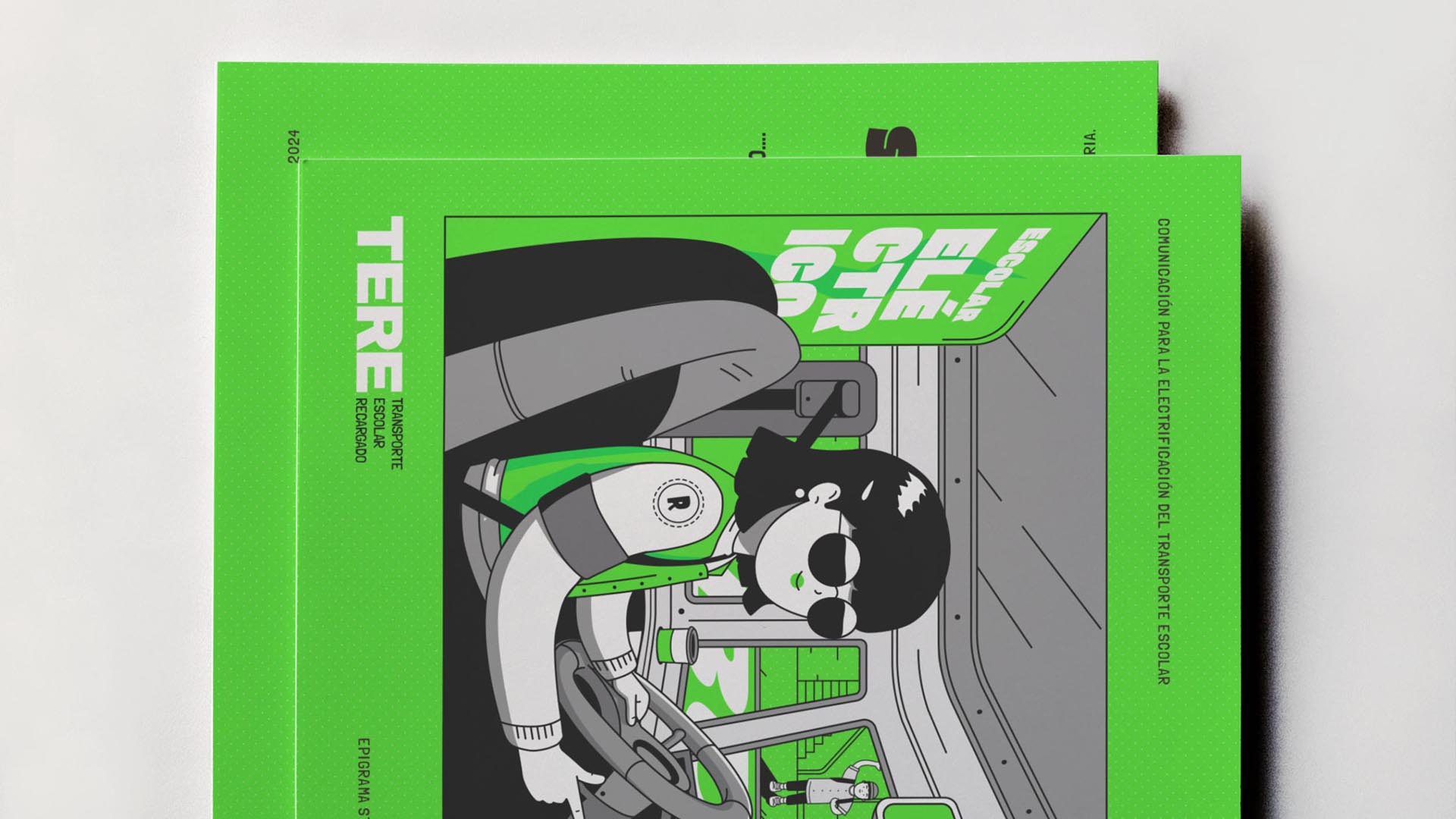
- Educational Editorial Design: We designed and authored the official workbook dedicated to explaining the environmental and health benefits of the electric fleet.
- On-Site Audiovisual Production: We documented the real-world operation of the pilot program along Bogotá’s school routes through a human-centered, ensemble documentary approach. We successfully bridged the technical dimension—showcasing the use of scientific equipment for measuring environmental impact—with the human story told by the operators on the route (drivers and monitors) and the strategic vision of the program directors from the Secretariat of Mobility.
- Post-Production & Institutional Co-Branding: We executed the editing, color grading, and final delivery of the audiovisual assets for distribution across the digital media of local government entities and international cooperation partners.
1. 360° Communication Strategy and Expectation Management in Energy Transition
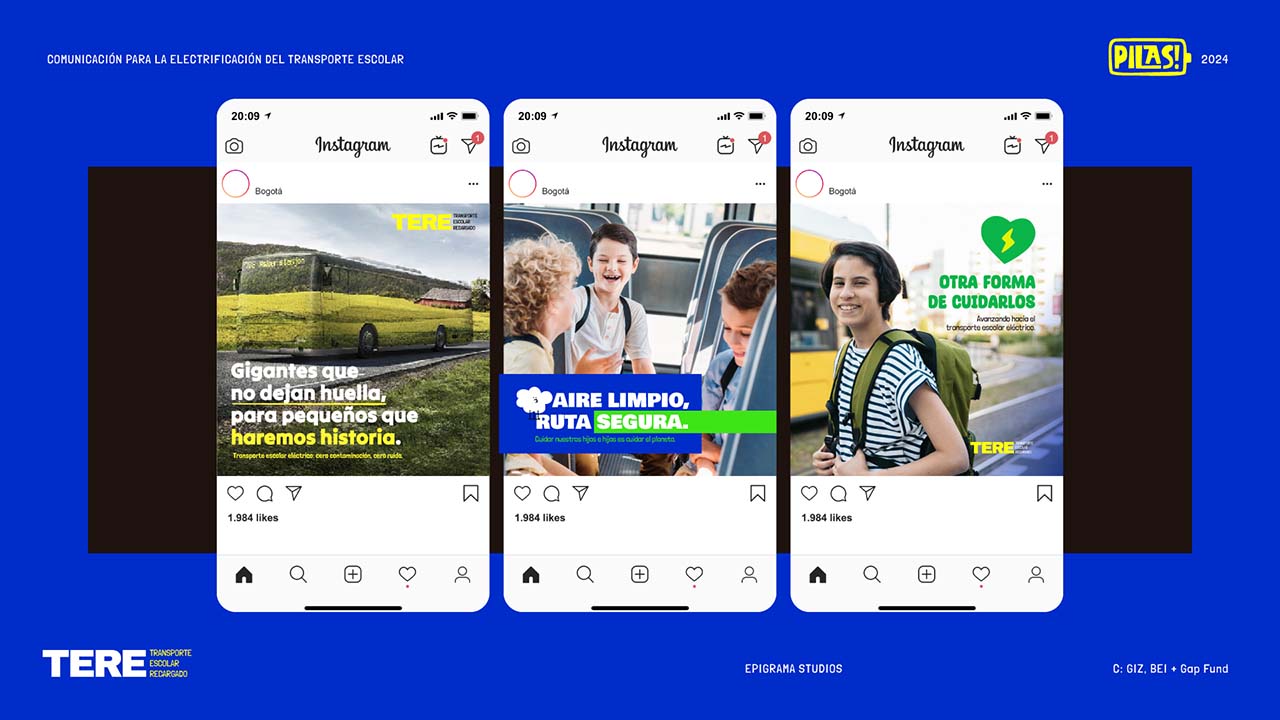
Alongside the GIZ and District teams, we developed a strategic discursive framework centered on communicating the pilot program as the beginning of a progressive and exploratory transition. Through collaborative review sessions and conceptual design, we structured a message architecture that stripped away technical transport-engineering jargon and replaced it with an approachable narrative. We aligned the benefits of clean mobility not only with environmental metrics but also with educational quality and equity, proving that safer, noise-free school routes foster a dignified learning environment for students.
To uncover the brand's core DNA, we conducted co-creation sessions and brand workshops where we articulated the brand's Why and its core values. Following this, we developed a comprehensive identity manual featuring clear communication guides, graphic parameters, a renewed visual universe, and cross-cutting messaging to convey the brand's portfolio and vision.
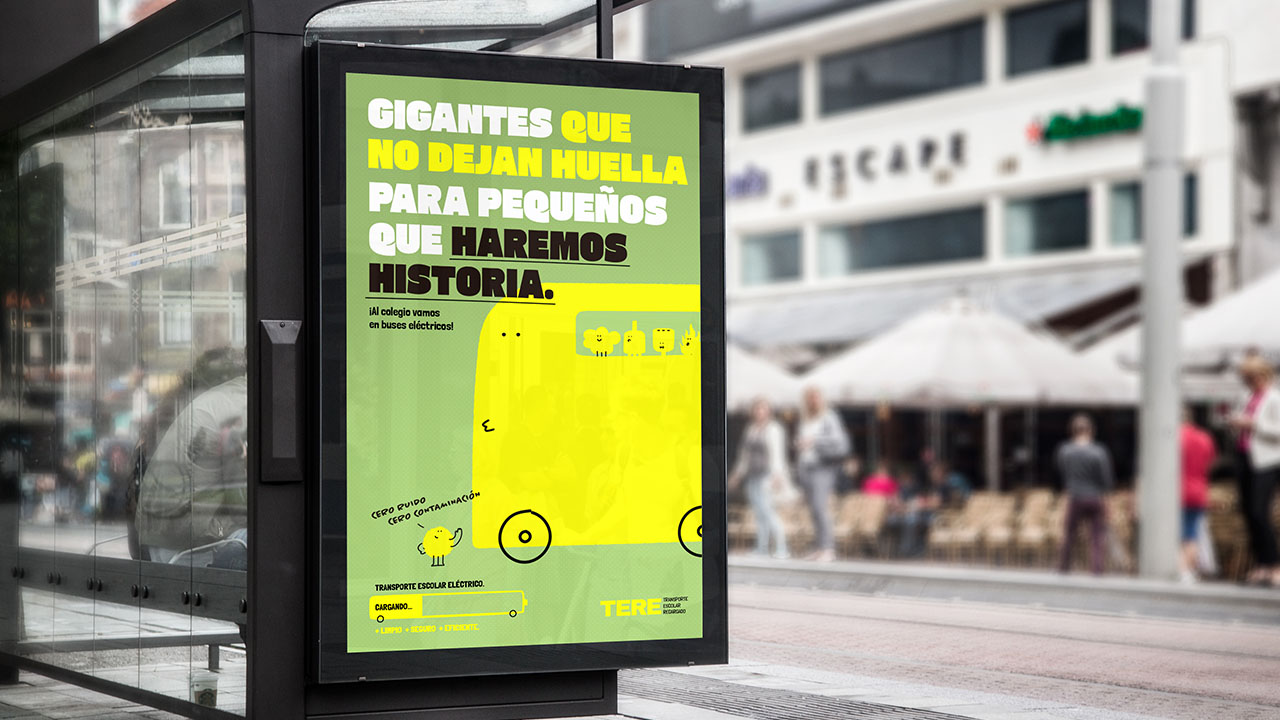
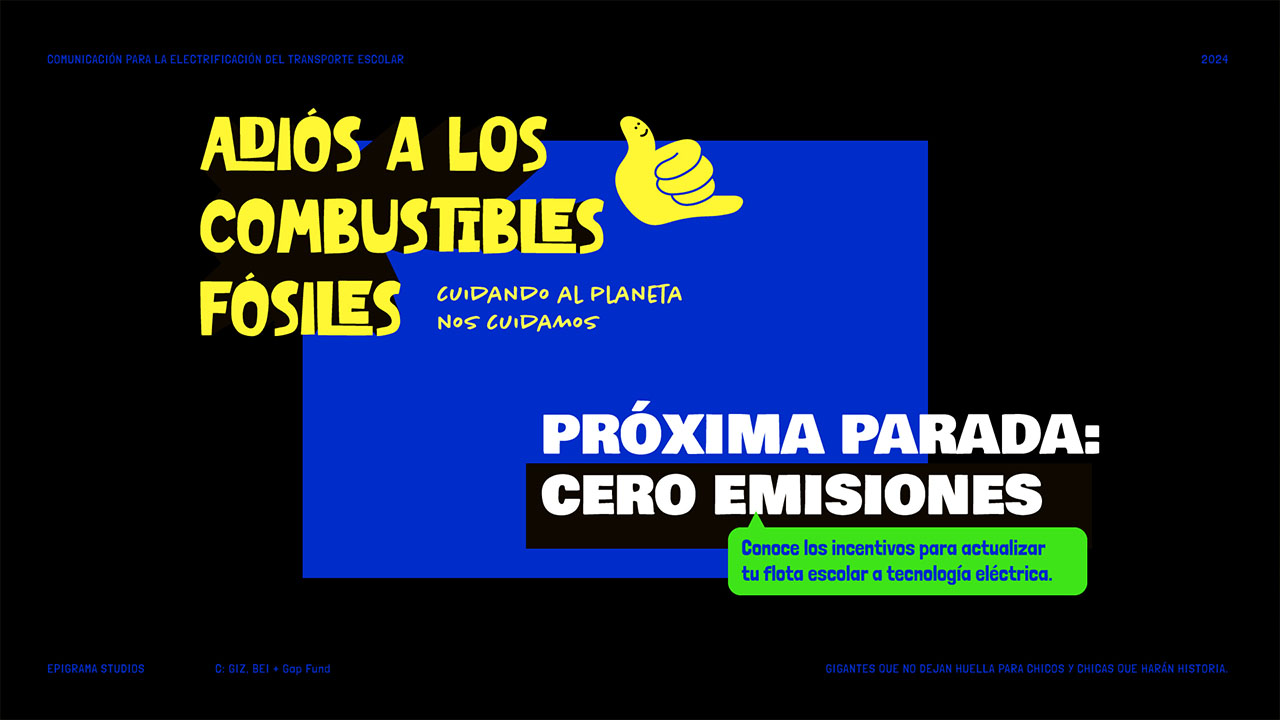
Through this process, and in tandem with character development, master brand taglines were born, such as "Next Stop: Zero Emissions", and "Giants that leave no footprint for little ones who will make history,"alongside fun character dialogues that break away from traditional public policy communication.
2. Visual Pedagogy: Charismatic Characters to Inspire New Generations
Once the discursive strategy was grounded, we understood that cultural change required an emotional connection with the system's youngest users. We created TERE’s graphic ecosystem and, as a defining factor, developed a universe of original illustrated characters inspired by a minimalist, charismatic, and high-impact aesthetic.
These characters were designed with a dual purpose: to act as playful visual guides within the educational resources and to serve as narrative vehicles to digest technical data concerning air quality and particulate matter (PM) reduction. By transforming an instructional manual into a memorable visual adventure, we enabled children to become the primary advocates and ambassadors of the energy transition within their households.
3. High-Value Educational Editorial Design: The Electric Fleet Workbook
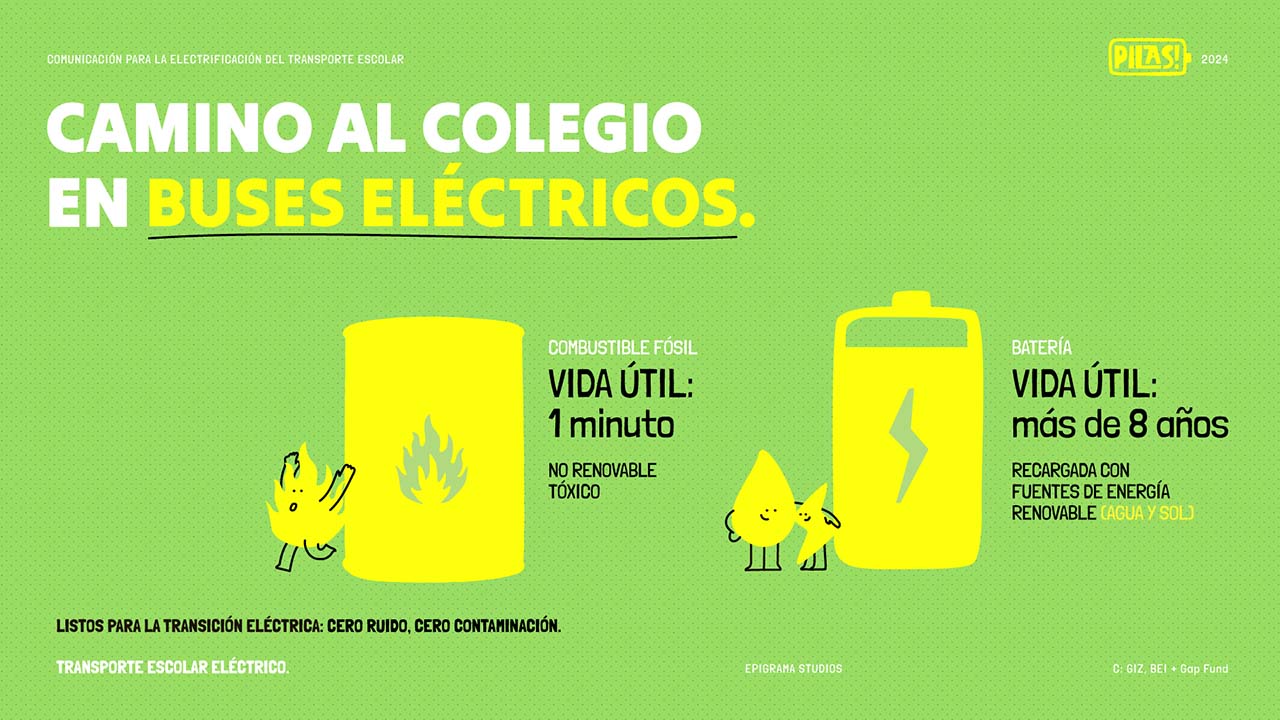
To bring the project's pedagogy to life, Epigrama designed, typeset, and authored the Official TERE Educational Workbook. This editorial resource focused on explaining complex energetic and public health concepts, such as greenhouse gas (CO2) mitigation and the reduction of noise pollution inside and outside the school bus, in a highly accessible way.
Thanks to clear information architecture, the workbook was strategically integrated with other sustainable and active mobility programs run by the city (such as Al Colegio en Bici and and Ciempiés Caminos Seguros). The result was an editorial piece of the highest visual caliber, celebrated and validated by the Secretariat of Education and the Secretariat of Environment as an official, replicable tool within the city's school system.
4. Field Audiovisual Direction and Scientific Recording of Environmental Impact
The audiovisual task consisted of capturing the reality of the pilot program through a human, documentary lens without losing the rigor of the technical experiment. We deployed on-site filming schedules, tracking the electric bus routes across Bogotá. We decided to give scientific measurement instruments (vibration sensors, decibel microphones, and gas analyzers) a prominent role on screen to visually legitimize the collected data.
The final output was consolidated into a short documentary, including institutional formats and short promotionalteasers. Through situated interviews, we turned a transport engineering test into an ensemble testimony of social innovation and civic pride.
Visit our home page to see more strategic branding projects.
Results Achieved
- Exceptional Validation and Praise from the Technical Board: The communication ecosystem and the educational workbook designed by Epigrama Studios were received with excellent evaluations and direct congratulations from the technical leads at GIZ, the Gap Fund, and the city District Secretariats, highlighting the outstanding effectiveness of the work and the fluid co-creation process.
- Digital Transfer Kit and Autonomous Scalability: We successfully delivered a robust package of unified multimedia assets, institutional templates, and editable resources. This provided the Secretariat of Mobility with a clear roadmap and a communication toolkit ready for deployment, publication, and continuity as the clean fleet public policy scales up.
- International Benchmark in Sustainable Communication: The strategy successfully demonstrated the link between international cooperation fund investments and their direct impact on the everyday lives of citizens. The TERE project established itself as a cutting-edge technological and communicative model, positioning Bogotá as a global, replicable benchmark for a just energy transition in regional school transit.
 EN
EN  ES
ES