Rural & Indigenous PAE: Territorial listening alongside The World Bank and UApA.
Keywords:
Documentary, Production, Creative Direction, Cinematography
- Audiovisual Production
- Documentary
- Filmmaking
- Writing / Script
- Photography and Film
Indigenous PAE Ep. 1: Guajira - Documentary

Indigenous PAE Ep. 2: Santa Marta - Documentary
Indigenous PAE Ep. 3: Guaviare - Documentary


Rural PAE Ep. 1: Nariño - Documentary
Rural PAE Ep. 2: Tumaco - Documentary
Rural PAE Ep. 3: Pupiales - Documentary
Visit our channel to see the complete miniseries
Starting point
- The World Bank, in partnership with the Food to Learn Unit (UApA), identified an urgent need to delve into the realities, barriers, and unique dynamics surrounding the School Feeding Program (PAE) within Colombia's most vulnerable communities.
- To truly comprehend how the Dispersed Rural PAE and the Indigenous PAE operate, analyzing spreadsheets from a desk was not enough; a profound, respectful immersion into the ecosystems of indigenous peoples was required.
Challenge / Opportunity
- The main challenge consisted of designing a communication and recording methodology based on active listening, capable of navigating geographical contexts of extreme logistical complexity to honestly document school feeding challenges on territory.
What We Did
We supported this rigorous exercise of research and visibility through a transmedia ecosystem that merged documentary filmmaking with high-level editorial and information design:
Documentary Miniseries Direction & Production: We conceptualized and produced two documentary miniseries conceived as living archives of the territories. We captured community voices, the labor of traditional knowledge-bearers, and geographical barriers across the country:
Dispersed Rural PAE (4-chapter miniseries): Documenting logistical complexities in remote regions such as Bocas de Satinga, Pupiales, and rural Nariño.
Indigenous PAE (5-chapter miniseries): Recording models of traditional food production and cultural relevance in La Guajira, Santa Marta, Guaviare, Cauca, and Casanare.
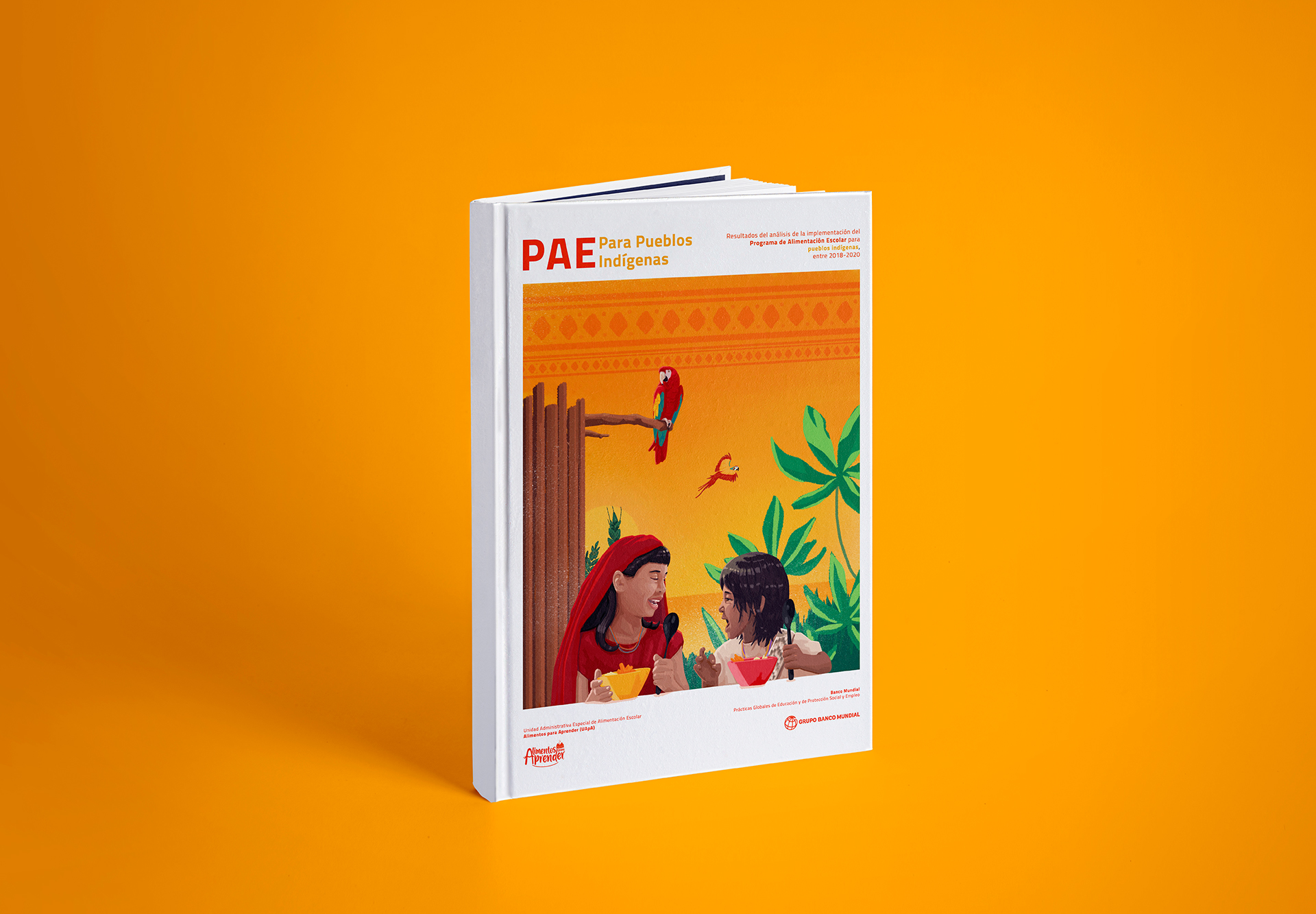
High-Impact Editorial Design & Illustration: In parallel with the audiovisual ecosystem, we transformed technical data and management reports for PAE Indígena and and PAE en Casa into beautifully crafted editorial pieces. We designed customized covers, layouts, and illustrations that provided these technical reports with a respectful, dignified visual identity deeply connected to the cosmogony of the impacted communities.
1. Active Listening Methodology & Audiovisual Co-Creation
This project placed Epigrama Studios' praxis at the very core of social research. Instead of imposing an external institutional narrative, the 9 documentary chapters were structured as a pure exercise of listening on the ground. We entered school kitchens, chagras (indigenous crops), and community assemblies to highlight how school feeding is intertwined with the cultural survival of indigenous peoples.
2. Information Design & Editorial Curation
The true power of strategic design lies in making the complex accessible. We took the dense data collected during the consultancy with The World Bank and structured it under rigorous editorial curation. Through custom native illustrations developed in our studio and a clean visual architecture, we ensured that the PAE result reports transcended dry bureaucratic files to become vital, living notebooks for global public policy decision-makers.
Visit Epigrama's channel to watch more documentaries.
3. Knowledge Network & Decentralized Storytelling
Executing this project solidified Epigrama Studios' technical and logistical capacity to operate in the most remote areas of deep Colombia (from the deserts of Alta Guajira to the jungles of Guaviare and the rivers of the Nariño Pacific). This immersion allowed us to fully understand the challenges of filmmaking on the ground—insights that proved invaluable for subsequent projects, such as the documentary recording of the Ministry of Culture's processes, ensuring a horizontal and decolonial approach to handling images and testimonies.
4. Food Sovereignty & Safeguarding Collective Memory
Given the fragility of social programs during political transitions, these documentary miniseries and illustrated books now serve as a shield for technical and historical memory. The digital assets delivered stand as an unalterable testimony to the communities' struggle to defend their food sovereignty, safeguarding ancestral culinary practices and setting a methodological precedent for future international cooperation projects in Latin America.
Results Achieved
Credibility Before Multilateral Organizations: We consolidated a transmedia ecosystem (audiovisual + editorial) delivered to the full satisfaction of The World Bank and UApA, setting a new benchmark for presenting outcome reports with social sensitivity and cutting-edge design.
Community & Institutional Ownership: We ensured that both indigenous leaders and state technicians saw themselves reflected symmetrically and with dignity, smoothing the path for dialogue toward improving the Indigenous School Feeding Program.
Living Archive of the Territory: The 9 audiovisual pieces and the suite of illustrated reports now act as educational tools and international reference archives, shining a light on the real faces, hands, and geographies behind food security metrics in Colombia.
 EN
EN  ES
ES